A message regarding potential network disruption for patients with Aetna insurance.
Healthy Living
Fever Facts: Causes, Symptoms and Effective Treatments
January 30, 2017

By Margaret Songy, Pharmacy Resident, Baptist Health-North Little Rock
What Is Defined as a Fever?
A fever is when your body temperature is higher than the normal core temperature of 100°F (37.8°C). Normal body temperature can vary from 97.5°F (36.4°C) to 98.9°F (37.2°C). Fever often worries patients and caregivers, but pharmacists can be a great resource for advice on using nonprescription fever-reducing medicines, also called antipyretics. Here are some important fever facts to help you understand what it means and how to manage it.
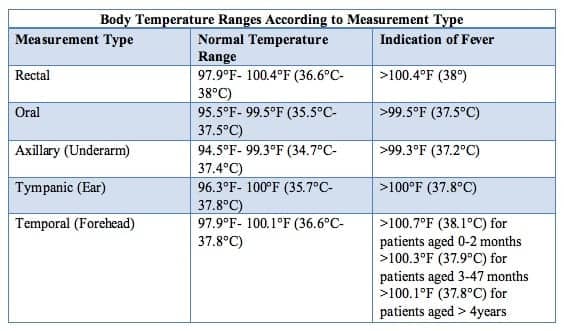
Below is a chart showing fever facts about temperature and how normal body temperature ranges differ depending on types of thermometers.
Causes & Symptoms: Key Fever Facts
A fever can be caused by many things, such as an infection, a reaction to certain medicines (drug fever), or for unknown reasons. Fever can also happen after common childhood vaccines. Most fevers are caused by infections from bacteria, viruses, fungi, or yeast.
When you have a fever, you may also have symptoms like headache, flushed face, chills, sweating and pain in your joints or muscles.
Treatment Options
One of the key fever facts is that the main goal when treating it is to make you feel better by lowering your temperature to normal.
Most fevers can be managed with the right care, but sometimes they may signal a serious illness, like a severe infection, that needs quick medical attention.
You can treat fever with both medicine and non-medication methods. Common over-the-counter fever reducers include acetaminophen (Tylenol) and non-steroidal anti-inflammatory drugs (NSAIDs) such as aspirin, ibuprofen (Advil) and naproxen (Aleve).
Acetaminophen and ibuprofen are the most used fever reducing medicines, but ibuprofen should only be given to patients older than 6 months. These medicines come in many forms for both adults and children, making them easier to give.
Usually, your temperature will go down and you’ll feel better within 30 to 60 minutes after taking medicine. Other helpful steps include drinking plenty of fluids to prevent dehydration, wearing light clothing and keeping your room at a comfortable temperature.
Fever Facts: Ways to Check Your Temperature
It’s best not to check for fever by feeling the forehead. Instead, use a good thermometer and follow the instructions to get an accurate reading.
Digital thermometers are the most common and can measure temperature in the mouth, ear, under the arm, rectum, or forehead. During an illness, try to use the same thermometer and the same location each time for accurate comparisons.
- Babies under 6 months: Rectal thermometers are best. Do not use ear thermometers because a baby’s ear is too small for an accurate reading.
- Children 6 months to 5 years: Rectal thermometers are preferred, but oral, ear, or forehead thermometers can be used if used correctly.
- People over 5 years: Oral, ear, or forehead thermometers work well.
If your symptoms continue and you need medical help, you can make an appointment with a Baptist Health provider to get answers and learn more fever facts.
